Nature Forgot to Read the Manual: Animals Whose Body Parts Are Doing Completely the Wrong Job
Imagine showing up to work and discovering that your coworker has been filing reports with their elbows, answering phones with their kneecaps, and somehow — somehow — doing a better job than you. That's basically the story of evolution. Nature handed out sensory organs like a distracted gift-wrapper at a holiday party, and a shocking number of creatures ended up with equipment that is technically in the wrong place, doing a job it was never officially assigned, and absolutely thriving.
So let's take a walk through the stranger neighborhoods of the animal kingdom, where the phrase "that's not what that's for" is less a criticism and more a philosophy.
The Butterfly That's Been Tasting Your Picnic Blanket
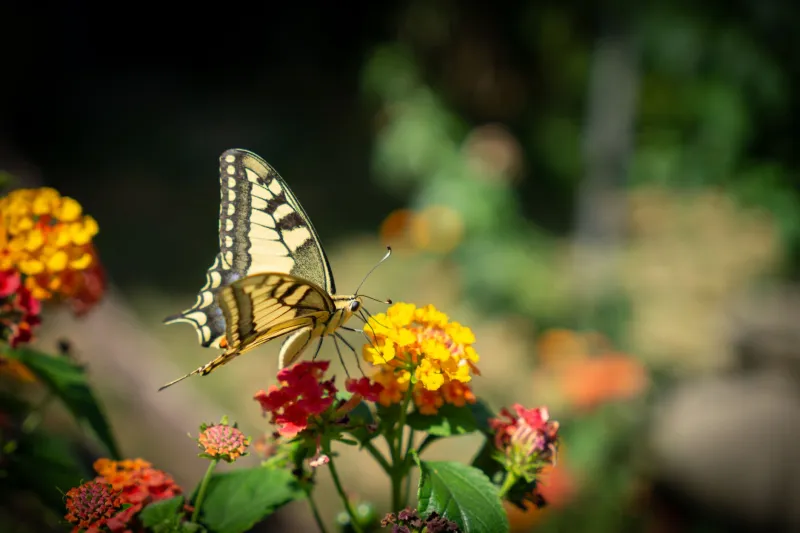
Here's a fact that will ruin every butterfly garden visit you ever take: butterflies taste with their feet. Specifically, they have chemoreceptors — sensory cells that detect chemical compounds — embedded in their tarsi, which is the fancy scientific term for their feet. When a butterfly lands on a flower, a leaf, or, yes, your hand, it is actively tasting whatever it's standing on.
The reason for this is actually pretty logical, even if it sounds completely unhinged. Female butterflies need to identify the right plants to lay their eggs on, because the caterpillars that hatch won't be going anywhere for a while and need the correct food source immediately. So rather than doing some kind of proboscis-based investigation every single time, evolution just built the taste test directly into the landing gear. Touch down, taste it, decide. Efficient. Disgusting. Brilliant.
Next time a butterfly lands on you, just know it is conducting a full flavor analysis of your forearm. You're welcome.
The Snake That Smells in Stereo — With Its Mouth
You've seen a snake flick its tongue and probably thought it looked vaguely menacing, like a tiny leather villain checking the weather. But what that snake is actually doing is collecting scent particles from the air and depositing them onto a specialized organ on the roof of its mouth called the Jacobson's organ, or the vomeronasal organ if you want to be fancy about it.
This means snakes are, for all practical purposes, smelling with their mouths. The forked shape of the tongue isn't decorative — each fork collects scent information from slightly different positions, giving the snake a kind of directional smell, like surround sound but for odors. It can tell not just what is nearby, but roughly where it is.
Your nose is sitting there doing one job in one location, and a corn snake is out here running a full sensory GPS system through its tongue. The bar has been set, and we are far below it.
The Octopus That Is Literally Tasting Everything It Touches
Octopi — already the undisputed champions of "animal that seems like it was invented by someone on no sleep" — have chemoreceptors lining their suckers. Every single one of those hundreds of little suction cups is simultaneously gripping and tasting whatever it touches. The octopus is not just holding your hand; it is reading your entire biography through its arms.
This makes a certain amount of sense when you consider that octopi are highly intelligent predators who need to evaluate their environment quickly and thoroughly. But it also means that every time an octopus explores a rock, a crab, or the bottom of a tide pool, it is receiving a simultaneous flood of tactile and chemical information from eight arms at once.
Scientists are still working out exactly how octopus brains process all of this. The current best guess is "extremely well, and better than we can fully understand yet," which is both reassuring and mildly terrifying.
The Catfish That Is One Giant Tongue
If butterflies tasting with their feet didn't rattle you, allow the catfish to finish the job. Catfish have taste buds distributed across their entire body — not just in their mouths, but along their skin, their whisker-like barbels, and essentially wherever evolution felt like putting them that day. Some species have over 175,000 taste buds covering their whole exterior.
For context, humans have somewhere between 2,000 and 10,000 taste buds, all politely located inside our mouths where they belong. A catfish is living inside a full-body flavor experience at all times. Every current in the water, every brush against a riverbed, every passing piece of food — it all registers as taste.
Muddy river water has never sounded so intense.
The Star-Nosed Mole That Touches the World at 22 Points Simultaneously
Okay, this one is less about misplaced organs and more about organs that took a maximalist approach. The star-nosed mole has a nose ringed by 22 fleshy, pink appendages that function as an extraordinarily sensitive touch organ. It can identify and consume food faster than the human eye can follow — we're talking under a quarter of a second from detection to meal.
The nose is so sensitive that it contains more nerve endings per square inch than almost any other known mammalian structure. The mole essentially experiences the world as a constant, incredibly detailed map of textures and pressures, all fed through what looks, generously, like a tiny alien satellite dish attached to its face.
It is the most efficient hunter relative to body size in the mammal world. It looks like a prop from a low-budget science fiction film. Both things are true.
What This All Means for the Rest of Us
Here's the genuinely interesting part lurking beneath all the weird biology: evolution doesn't optimize for elegance. It optimizes for good enough to survive and reproduce, which means the natural world is full of solutions that look completely ridiculous from the outside but work absolutely fine in practice.
Your nose is where it is because that's where it ended up and you survived. The butterfly's taste buds are in its feet because that worked well enough to keep butterflies around for roughly 200 million years. The octopus is tasting with its arms because no one told it not to, and it has been doing spectacularly ever since.
There's something quietly reassuring about that. The universe's most successful designs aren't always the most sensible-looking ones. Sometimes the best system is the one that just keeps working, no matter how strange it looks from the outside.
Also, butterflies have been tasting your picnic this entire time. That part is just funny.