3,000-Year-Old Honey Is Still Perfectly Edible — Your Leftovers Gave Up on Day Two
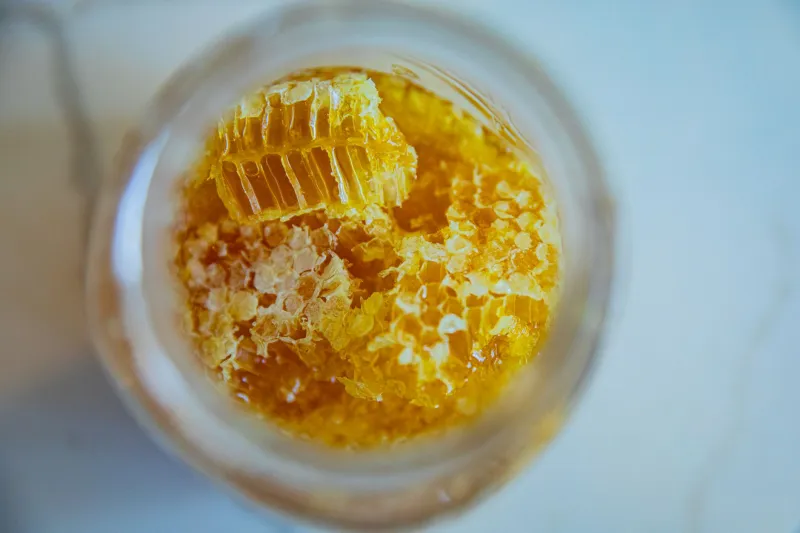
Somewhere in Egypt, a pharaoh's pantry sat sealed for three millennia. When archaeologists cracked it open, they didn't find dust and regret — they found honey. Edible, sweet, genuinely not-trying-to-kill-you honey. Meanwhile, the leftover General Tso's you shoved into the back of your fridge last Thursday has already developed what can only be described as ambitions.
So what exactly is going on? Why do some foods basically refuse to die while others seem to sprint toward spoilage the moment you look away? Buckle up, because the answer involves water activity, microbial warfare, and the humbling realization that bees are better food scientists than most of us.
Honey's Secret Weapon: It's Basically a Desert in a Jar
The key to honey's immortality isn't magic — it's moisture, or more accurately, the total absence of it. Honey has what food scientists call extremely low water activity, which is a fancy way of saying there's almost no free water floating around for bacteria or mold to use. And here's the thing: microorganisms are needy. They need water to grow, reproduce, and generally cause chaos in your kitchen. Without it, they simply can't get started.
But honey doesn't stop there. It's also naturally acidic, with a pH hovering between 3.2 and 4.5. That's more acidic than your average cup of coffee. Most bacteria find that environment about as hospitable as a Phoenix parking lot in August. And then — as if honey wasn't already showing off — bees add an enzyme called glucose oxidase during production, which slowly releases small amounts of hydrogen peroxide. That's right: honey is continuously, quietly disinfecting itself. It is, in the most literal sense, its own preservative.
Archaeologists excavating ancient Egyptian tombs have reportedly sampled honey found alongside mummies and declared it still good. Whether that takes tremendous scientific courage or just tremendous hunger is a matter of personal interpretation.
Salt and Oil: The Other Kitchen Immortals
Honey isn't the only pantry item laughing at the concept of expiration dates. Pure salt, for instance, never expires. Ever. Salt is a mineral. It doesn't have the biological machinery to go bad because it was never alive in the first place. What salt does do is pull water out of anything it touches — which is exactly why humans have been using it to preserve meat and fish for thousands of years. Salt-cured foods show up in ancient Roman records, Viking provisions, and basically every pre-refrigeration civilization that wanted to survive winter.
Olive oil is another one. Pure, properly stored olive oil can last for years without going rancid because it lacks the water content that microbes need to thrive. Ancient Roman amphorae — those big clay vessels — have been pulled from Mediterranean shipwrecks containing oil that was still chemically intact after 2,000 years underwater. The sea, weirdly, did the oil a favor by keeping it dark and cool.
White rice, white sugar, pure vanilla extract, and hard liquor are similarly blessed with near-infinite shelf lives. Notice a pattern? Anything that's either completely dry, completely acidic, or high enough in alcohol is basically living in a fortress that bacteria cannot breach.
So Why Does Your Pizza Become a Science Experiment?
Here's where it gets humbling. Pizza — and really most cooked leftovers — is the opposite of a fortress. It's more like a welcome center for microbial activity.
Cooked food has already had its cellular structures broken down by heat, which makes nutrients more accessible. Cheese introduces fats and proteins that certain bacteria absolutely love. The tomato sauce provides moisture. The crust, once it absorbs ambient humidity, becomes a soft, inviting environment for mold spores that are literally floating through your kitchen air at this very moment. (You're welcome for that image.)
The USDA recommends eating refrigerated leftovers within three to four days, and that's not just bureaucratic caution — it's because even at refrigerator temperatures, bacterial growth only slows down. It doesn't stop. Your fridge is stalling, not preventing. Pathogens like Listeria actually thrive in cold environments, which is a deeply unsettling fact that deserves more airtime.
Cooked rice is particularly notorious. It can harbor Bacillus cereus, a bacterium that produces heat-resistant spores, meaning reheating doesn't necessarily kill the toxins already produced. This is why "fried rice syndrome" is a real thing with a real Wikipedia page and real consequences for people who leave takeout on the counter overnight.
The Ancient Foods That Put Your Pantry to Shame
If honey and salt haven't already made your leftovers feel insecure, consider these archaeological discoveries:
- 2,000-year-old wine has been found in Roman vessels, still chemically recognizable as wine (though perhaps not something you'd bring to a dinner party).
- Permafrost-preserved butter called "bog butter" has been dug up in Irish peat bogs, some of it over 3,000 years old. Experts describe it as still smelling like butter, which is either fascinating or terrifying depending on your relationship with dairy.
- Fruitcake, which is essentially a dense matrix of sugar, dried fruit, and alcohol, is famously shelf-stable. Antarctic explorer Robert Falcon Scott left fruitcake on his 1910 expedition. A century later, conservators described it as "almost edible" with "a smell like a musty old cupboard." A ringing endorsement if there ever was one.
- Seeds found in ancient storage pots have been successfully germinated after thousands of years — including a date palm seed from around 2,000 years ago, nicknamed "Methuselah," that researchers actually grew into a living tree in Israel.
What This Means for Your Actual Refrigerator
The practical takeaway here is both simple and slightly annoying: the foods that last forever generally don't need refrigeration, and the foods in your fridge are working against the clock whether you acknowledge it or not.
Honey? Store it at room temperature, sealed, away from moisture. It will outlive everyone you know. Salt, sugar, white rice, and hard alcohol? Same deal. These are pantry champions.
Your pasta, your soup, your leftover rotisserie chicken? Eat them within three to four days or freeze them. Freezing genuinely pauses microbial activity — it's one of the few things humans figured out that actually works as well as advertised.
And maybe, just maybe, the next time you open a jar of honey, take a moment to appreciate that you're eating something with better longevity than most ancient civilizations. Your pizza, bless its heart, never stood a chance.