The Kitchen Appliance That Beat the Internet to the Punch — By About 50 Years
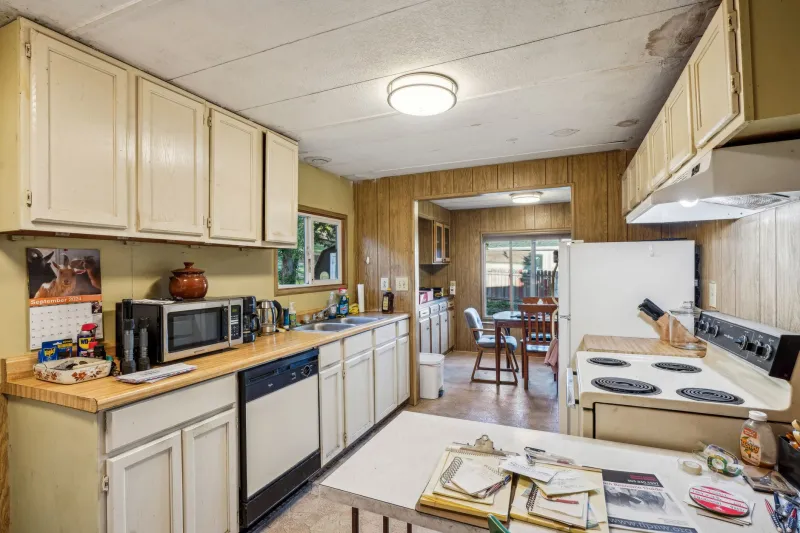
There's a squat, humming rectangle on your kitchen counter that you probably haven't thought about since the last time it exploded a Hot Pocket. You wipe it down occasionally. You ignore the clock on it. You absolutely do not know what the "sensor reheat" button does. And yet, this unremarkable appliance — your microwave — is one of the oldest, fastest, and most stubbornly irreplaceable pieces of technology in your entire home.
Here's the fact that should genuinely stop you mid-bite: microwave ovens were invented in 1945. The internet, as most Americans know it, didn't arrive until the early 1990s. That means your microwave is nearly half a century older than your ability to argue with strangers online — and it is still, to this day, one of the fastest ways to heat food ever devised by human hands.
Let that marinate. Or don't. Because the microwave definitely won't wait.
A Happy Accident Involving Radar and a Melted Candy Bar
The microwave oven wasn't born from some grand vision of the future. It was born from a guy standing next to military radar equipment and noticing that the chocolate bar in his pocket had turned into a gooey mess. That guy was Percy Spencer, an engineer at Raytheon, and in 1945 he had the presence of mind to think, "Huh. What if we did that... but to a chicken?"
Spencer began experimenting with magnetrons — the same tubes that powered wartime radar systems — and discovered that the microwave radiation they emitted could heat food from the inside out at extraordinary speed. The first commercial microwave, the "Radarange," stood nearly six feet tall, weighed around 750 pounds, and cost the equivalent of roughly $56,000 in today's money. It was marketed primarily to restaurants and industrial kitchens because, naturally, nobody's 1940s apartment had the floor space or the budget for what was essentially a refrigerator-sized radar cannon.
By the 1970s, countertop versions had become affordable, and by the 1980s, the microwave had cemented itself as a permanent fixture in the American kitchen — right around the same time we were all getting very excited about cassette tapes and shoulder pads.
So Why Can't We Build Anything Faster?
Here's where it gets genuinely interesting, and not just in a "fun fact for your next dinner party" kind of way.
Microwave ovens work by emitting electromagnetic waves at a frequency specifically tuned to agitate water molecules inside food. Those molecules vibrate, generate heat, and your soup goes from fridge-cold to scalding your entire mouth in under three minutes. The process bypasses the slow, outside-in heat transfer of a conventional oven entirely. There's no preheating. No waiting. No standing there watching a burner like it owes you money.
Modern cooking innovation has given us air fryers, induction cooktops, sous vide immersion circulators, and countertop convection ovens with WiFi connectivity and companion apps. And while all of those things are genuinely great for specific tasks — nobody's air-frying leftover soup — none of them can match the raw, brute-force speed of a microwave for simple reheating. Physics, it turns out, is pretty hard to out-engineer.
The microwave doesn't have a better version. It just has the same version, in different colors, with a few extra buttons nobody uses.
The Psychology of Not Fixing What Isn't Broken
This brings us to the part of the story that's less about radar and more about human nature.
Psychologists have a concept called the "if it ain't broke" heuristic — the deeply human tendency to leave functional things alone, even when we're surrounded by pressure to upgrade, improve, or optimize everything in our lives. We live in a culture that practically worships disruption. There's an app for everything. Every gadget gets a sequel. And yet, the microwave sits on your counter, unchanged in any meaningful way since your parents were watching Cheers reruns, and nobody is losing sleep over it.
Researchers who study consumer behavior note that people form strong attachments to appliances that are reliable and low-maintenance. The microwave asks almost nothing of you. It doesn't need a software update. It doesn't require a subscription. It doesn't send you notifications. It just heats your food and shuts up. In an era of relentless complexity, that kind of quiet competence is, apparently, enough to make something immortal.
There's also the sunk-cost dimension. Americans collectively own hundreds of millions of microwave ovens. Replacing a technology that's already in nearly 90% of U.S. households — and works perfectly — would require a genuinely revolutionary alternative. So far, nothing has shown up to audition for the role.
The Appliance That Outlived Its Era and Didn't Care
Consider the company it keeps. The 1940s also gave us technologies like reel-to-reel tape recorders, early television sets, and analog telephone switchboards. Those are all either museum pieces or punchlines now. The microwave, meanwhile, is still doing its job every single morning when you reheat your coffee for the third time because you forgot about it again.
There's something almost poetic about it. The internet reshaped civilization. Smartphones rewired our brains. Streaming services dismantled entire industries. And through all of it, a beige plastic box with a spinning turntable just kept quietly winning the speed race in your kitchen, completely indifferent to the chaos around it.
Percy Spencer, who never graduated high school and taught himself electrical engineering through sheer stubbornness, patented a technology that has now outlasted nearly every contemporary invention of its era. Raytheon eventually sold the microwave division. The Radarange brand faded into history. But the underlying idea — point microwaves at food, make food hot, get on with your day — turned out to be so fundamentally correct that nobody has seriously improved upon it in eighty years.
The Takeaway (Heated to Perfection in 90 Seconds)
Next time you're standing in front of your microwave, watching that plate rotate while the seconds count down, take a moment to appreciate what you're looking at. That's not just an appliance. That's a piece of 1940s engineering that has quietly, stubbornly, and without any fanfare whatsoever, beaten every competitor the modern world has thrown at it.
The internet changed everything. The microwave just changed your leftovers.
And honestly? That might be the more impressive accomplishment.