Your Body Has Secret Bones and Animals Have Secret Knees — Evolution Has Been Hiding Things From Us
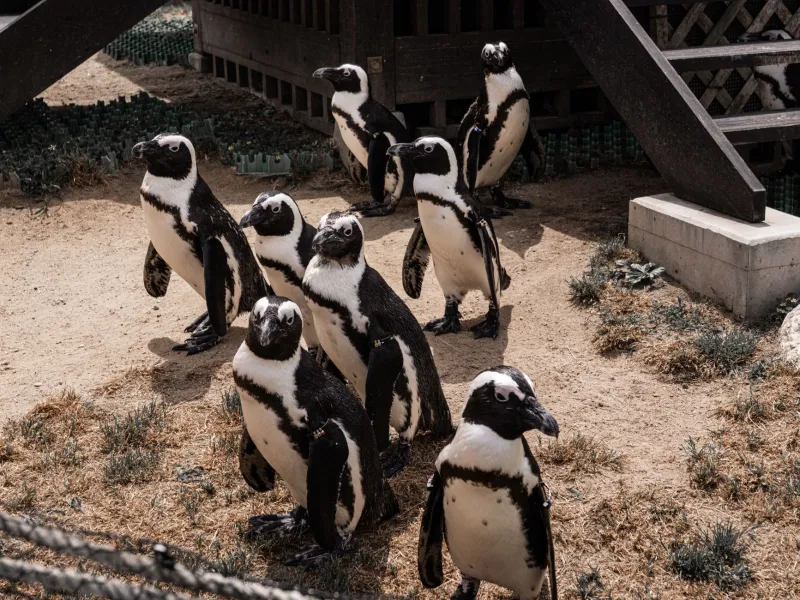
Here's a question nobody asked you in school but absolutely should have: do penguins have knees? Go ahead, picture a penguin. That iconic tuxedo waddle. Those stubby little legs. Surely, no knees, right? They look like they're just... stumping around on tiny penguin stilts.
Wrong. Penguins have knees. Fully operational, anatomically legitimate knees — they're just tucked up inside the body, hidden beneath all those waterproof feathers like a biological secret the animal kingdom has been keeping from us. And honestly? That's just the beginning of the weirdness.
Evolution, it turns out, is less of a master engineer and more of a deeply sentimental packrat. It doesn't delete old blueprints. It just... repurposes them, hides them, or occasionally forgets about them entirely. The result is a natural world full of body parts that seem like they have no business being there — and yet, there they are.
The Penguin Knee Situation Deserves Its Own Moment
Let's linger on the penguin thing just a little longer, because it genuinely rewires how you see these birds. A penguin's leg is structured almost identically to a human leg: femur, knee joint, tibia, fibula, the whole deal. The reason they look like stubby little creatures with no knees is that their upper legs are completely enclosed within their body cavity, held tight against the torso.
What you're seeing when you watch a penguin waddle isn't actually their full leg — it's essentially just the lower portion, from the knee down. That signature side-to-side wobble? That's not clumsiness. That's a penguin swinging from the knee, which is pressed flush against its body. Suddenly the waddle feels less goofy and more... architectural.
Knowing this, by the way, will make you look at every penguin you ever see at a zoo or on a nature documentary with a completely new kind of respect.
Snakes Have Hip Bones (No, Really, Stop Laughing)
If penguin knees broke your brain a little, prepare yourself for snake hips.
Most snakes — including pythons and boa constrictors — have small remnant pelvic bones buried inside their bodies. These are called vestigial structures, which is science-speak for "we used to need this, we kind of don't anymore, but we haven't gotten around to deleting it from the code." In some species, these pelvis remnants even poke out as tiny external spurs near the tail. You can actually see them if you know where to look.
Why do legless animals have hip bones? Because snakes evolved from lizards that had legs. Millions of years ago, the ancestors of modern snakes were four-legged creatures. Legs became less useful as these animals adapted to burrowing or aquatic lifestyles, so evolution gradually minimized them — but never fully erased the skeletal memory. The hips stayed, like an old piece of furniture you keep moving from apartment to apartment because getting rid of it feels wrong.
Whales Are Just Really Committed to the Bit
While we're dismantling everything you thought you knew about vertebrate anatomy, let's talk about whale flippers.
When you look at a whale's flipper from the outside, it looks like a smooth, paddle-shaped appendage — nothing fancy, just a useful tool for steering through the ocean. But X-ray that flipper and your jaw will hit the floor. Inside, you'll find five distinct finger bones, arranged in almost exactly the same configuration as a human hand.
Whales are mammals, and their ancestors were land-dwelling creatures that returned to the sea roughly 50 million years ago. As flippers replaced legs, the internal bone structure didn't disappear — it just got repackaged. Those "fingers" are still in there, wrapped in thick tissue, doing their part to give the flipper its flexibility and strength. A whale is basically waving at you with a very well-disguised hand.
Dolphins have the same deal. So do manatees. The ocean is full of animals secretly gesturing at us with their hidden fingers, and we've been completely oblivious.
Giraffes and Humans Are Basically Neck Twins
This one tends to stop people mid-sentence at dinner parties, which is exactly the kind of chaos we endorse.
A giraffe's neck can reach six feet in length. A human neck is maybe five or six inches on a good day. And yet — and here's where your sense of biological fairness completely collapses — both animals have exactly seven cervical vertebrae. Seven. The same number.
The giraffe's vertebrae are just dramatically, almost offensively larger than ours. Each one can be over ten inches long. But the count? Identical. In fact, almost all mammals — from shrews to manatees to humans to giraffes — share this seven-vertebrae neck structure. It's one of the most stubborn constants in mammalian evolution, held in place so long and so firmly that even the most extreme neck elongation in natural history couldn't shake it.
Sloths are one of the rare exceptions, with some species sporting eight or nine cervical vertebrae. Sloths, apparently, decided to do things differently. Which honestly tracks.
Your Own Body Is Hiding Things Too
Before you feel too smug about being a highly evolved human, know this: your body is also full of evolutionary leftovers that have no obvious modern purpose.
The plantaris muscle, a thin little strand running along the back of your calf, is thought to be a remnant from when our ancestors used their feet for gripping. It's so vestigial that about 9% of people are born without it entirely — and surgeons actually harvest it for reconstructive procedures in other parts of the body when needed, since its absence causes zero functional problems.
Then there's the palmaris longus, a forearm tendon you can spot by pressing your thumb to your pinky and flexing your wrist — a thin ridge pops up in the center of your forearm. About 14% of people don't have it at all. It's believed to be a remnant from tree-climbing ancestors. Completely useless for modern humans. Still hanging around in most of us like a biological houseguest who never got the hint.
And the goosebumps you get when you're cold or scared? Those are your body attempting to puff up fur you no longer have. Your arrector pili muscles — the tiny muscles attached to each hair follicle — are contracting to raise hairs that, in a furrier ancestor, would have provided insulation or made the animal look bigger to predators. On modern humans, all they do is produce goosebumps and occasionally make people think you're cold when you're actually just watching a great movie.
Why Evolution Keeps All This Old Stuff Around
The short answer is: evolution doesn't have a recycling bin. It can't sit down and decide to delete a structure — it can only work with what already exists, gradually modifying things over generations in response to environmental pressure. If a feature isn't actively harmful, there's often no strong force pushing it toward elimination, so it just... persists.
Vestigial structures are also some of the most compelling evidence for shared ancestry among species. The fact that your hand and a whale's flipper share the same bone arrangement isn't a coincidence — it's a record of the common ancestor you both descended from, preserved in calcium and cartilage across tens of millions of years.
Every hidden knee, phantom hip, and secret finger bone is essentially a fossil you can find in a living animal. Evolution is writing its autobiography in anatomy, and most of us have never thought to read it.
Next time you see a penguin at the aquarium, give it a respectful nod. That bird has knees. It has earned your acknowledgment.